DRAGONS project launches on 1st June 2026
Diffusing biodiversity Response-able Action and awareness raising through citizen empowerment, inclusive engagement and innovative GOvernance of Nature and Society
We have participated in related processes including the IPBES (Intergovernmental Science-Policy Platform on Biodiversity and Ecosystem Services) and the EU’s Mapping and Assessment of Ecosystems and Ecosystem Services (MAES) along with several EU projects (Horizon Europe, Interreg and LIFE projects) and EU expert groups. We have been the Commission’s experts on evaluating nature-based solutions and green infrastructure projects. In our ecosystem services assessment projects, we quantitatively and qualitatively evaluate ecosystem services through deploying literature reviews, interviews, surveys, monetarization tools, and have paid elevated emphasis on involving local stakeholders and experts through participatory approaches.
We have been carrying out research and advocated for sufficient energy use at UN and EU level for 15 years. We analyse the national household energy use of Central and Eastern European countries. We raise the energy sufficiency profiles of international organisations and projects focusing on alleviating energy poverty. We have evaluated national and international energy related programmes from an energy sufficiency point of view. We have developed and disseminated an interactive, awareness raising game towards the needed socio-economic transformation.
Understanding individual and institutional choices and behaviour, will help understand how our society steers for an (un)sustainable future. We carry out ground-breaking research on biodiversity and behaviour to drive social transition and transformation within sectors and society. We identify policy entry points and leverage points at various levels and advocate for just transition and societal change will induce transformation. We aim to contribute to a network of transformation scientists and practitioners EU-wide focusing on climate and biodiversity issues through international projects.
See our previous and current projects below.
See below our latest projects and our top qualities.
We provide complex services starting from procurement through policy expertise and scientific assessments to result in integration, dissemination and process facilitation.
As certified facilitators and advisors running almost 100 international and national workshops, we can nurture processes from plans to successful completion. With our basic values of candour, respect of opinion and mindful listening, we can make all participants comfortable to share their points openly, which in return help their empowerment.

Diffusing biodiversity Response-able Action and awareness raising through citizen empowerment, inclusive engagement and innovative GOvernance of Nature and Society
Ecological economists from across Hungary gathered at Corvinus University of Budapest on 27 April for an inspiring afternoon workshop and Tim Jackson’s public lecture on his latest book, The Care Economy. The event was organised by the Research Center for Ecological Economics at the Corvinus Institute for Advanced Studies (CIAS), Corvinus University of Budapest, which hosted both the…
Mid April, a DAISY workshop was held in Budapest to discuss how to move the Budapest Degrowth Doughnut (BDD) from an inspiring concept toward a more operational pathway for urban governance. The core group of the BDD DAISY seed innovation includes representatives of the Budapest Municipality, Corvinus University of Budapest, and the Budapest Public Transport…
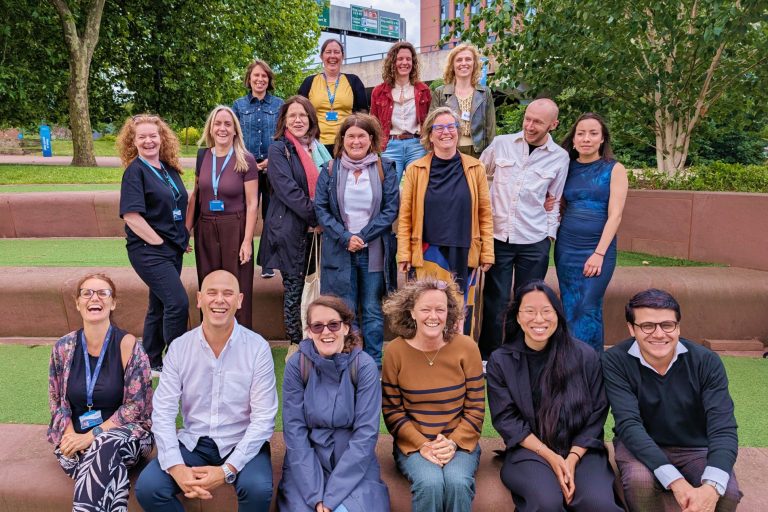
DAISY’s second consortium meeting brought 18 partners from Hungary, Germany, Greece, the UK and the Netherlands to Budapest from 24–26 March 2026, combining intensive work sessions with an urban field trip through one of the inner district of Budapest. Based at Impact Hub Budapest, researchers from different fields took stock of DAISY’s progress so far,…
On Thursday 19 March, a group of Planning and Environmental Management students from Technological University Dublin (TU Dublin) joined GreenFormation for a short afternoon walk in Budapest to explore how degrowth donut related ideas are taking shape in the city’s neighbourhoods. The visit built on our collaboration within the Horizon Europe DAISY project, which focuses…
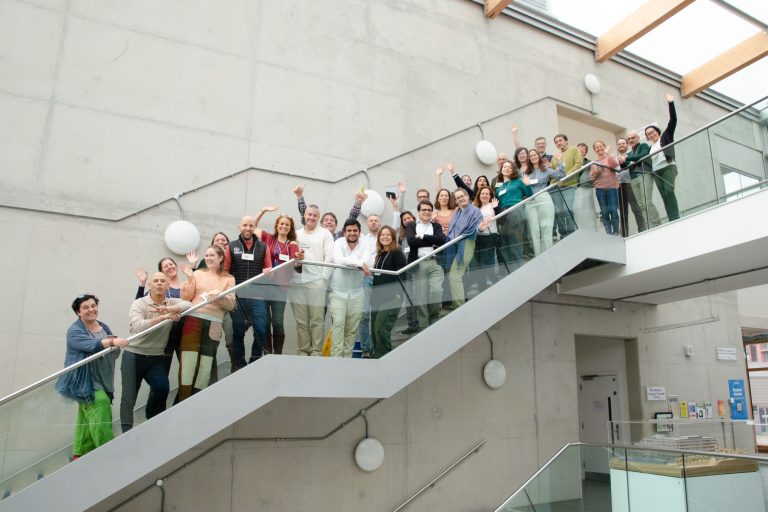
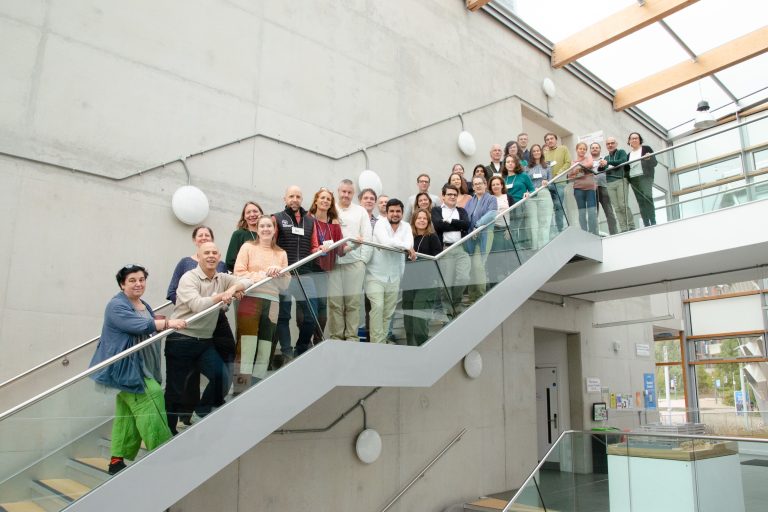
The OneSTOP consortium held its latest project meeting in Almería, Spain, from 19 to 22 January, hosted by EEZA-CSIC. Over three days, partners reviewed the progress of the different work packages, discussed links and dependencies between activities, and clarified open questions to ensure smooth continuation of the upcoming tasks. The meeting provided a structured space…
On 6 February 2026, GreenFormation presented the Co-Bio project at the “Adaptation? Naturally!” UPSURGE final conference. The event provided a valuable platform for knowledge sharing and networking among international and directly EU-funded projects, featuring Hungarian case studies on nature-based solutions. GreenFormation contributed with a short Co-Bio introduction as part of the morning mini-presentations, and then…
The EMCCINNO team, GreenFormation is part of, is pleased to share the release of a new short, 7-minute video produced within the project, built around the question “What was the turning point for you?”. The video features reflections from project partners, including two colleagues from GreenFormation, to explore personal experiences that inspire climate action and…
As the Co-Bio project draws to a close, we reflect on the diversity and creativity of the local case studies that took place across six European countries. From micro-forests in Portugal and biodiversity gardens in Italy, to urban campus greening in Austria, schoolyard and park transformations in Greece, biodiversity boxes in Denmark, and neighbourhood-scale co-creation…
At the start of December, Budapest became the vibrant meeting point for the second EMCCINNO project gathering, bringing together five pilot sites from across Europe: ZK/U (Germany), Be.Time (Spain), KÖME (Hungary), JACC (Portugal), and Friche la Belle de Mai (France). Hosted by GreenFormation and Internép, the event centered on exchanging updates, refining strategies, and deepening…
EMES is a research network of university research centers and individual researchers on social enterprise. One of our running Horizon project, EMCCINNO, was featured at the 10th EMES International Research Conference, where the impact of culture and social enterprise on Europe’s climate transition was brought into focus. For three years long, EMCCINNO works to empower…
On 21–22 October 2025, Co-Bio partners gathered for the project’s final in-person meeting, hosted by GreenFormation in Budapest. As the project approaches its end, this meeting offered a crucial moment to reflect, consolidate key learnings, and discuss the finalisation of Co-Bio’s two main outputs: the teaching methodology and the co-creation guide. Partners presented updates on…
On October 17th, a local democracy workshop at one of Budapest’s community houses celebrates the growing role of participatory tools and democratic innovation in Hungary. Our colleague, György Pataki, represents GreenFormation during the first session dedicated to participatory knowledge production and decision-making, sharing valuable insights on how research driven by stakeholders can foster meaningful change…
Our artistic partner in the EMCCINNO project, the Association of Cultural Heritage Managers (KÖME), is developing an experimental site called INTERNÉP in Budapest, in collaboration with the artist co-op Pneuma Szöv. The Budapest pilot serves as a vibrant example of how art and community collaboration can spark sustainable change by mapping and shaping the ecosystem…
In the framework of the Co-Bio project, the Hungarian local case study “Wekerle, naturally!” successfully concluded its community activities over the summer, marked by strong local engagement and increasing support for urban biodiversity. Throughout the past year, we organised a series of thematic events—including talks on urban wildlife, bird- and pollinator‑friendly gardening, and an evening…
The ISEE-Degrowth 2025 Conference, being held from June 24–27 at the University of Oslo, is a landmark event uniting the 18th International Society for Ecological Economics (ISEE) Conference and the 11th International Degrowth Conference. With the theme “Building Socially Just Postgrowth Futures – Linking Theory and Action,” this gathering brings together scholars, policymakers, activists, and…
An exciting community project has been launched through the joint initiative of the Alföldi (Lowland) Shelter and the street newspaper “Fedél nélkül” (Without Shelter), which will culminate this autumn in a special issue titled “Fedő nélkül” (“Without a Lid”). The publication aims to uncover the hidden sides of the Népszínház (People’s Theater) Street area, with…
The OneSTOP project is working to address the spread and impact of terrestrial invasive alien species (IAS) across Europe. Through research, collaboration, and outreach, we aim to support more effective prevention, detection, and management of IAS. The first version of the project’s website is available in eight languages and serves as a central hub for…
As part of the “Wekerle, Naturally!” urban biodiversity programme within the Co-Bio project, a drawing competition titled “Do Animals Live at Your Place?” invited children and young people -from kindergarten to high school- to reflect creatively on the animals that share our urban environment. The competition received many imaginative entries from participants aged 5 to…
FEDŐ NÉLKÜL / WITHOUT A COVER is a collaborative project initiated by Internép in partnership with the Budapest Methodological Social Center and its Institutions (BMSZKI, including homeless shelter) and the editorial team of Without a Cover. This partnership embarks on a community-driven exploration of Népszínház Street, fostering connections and exchanges between the participants and the…
Internép has been delivering a placemaking process on Népszínház street, named after the former People’s Theatre, located in the centre of Budapest, until 1965. This multicultural street has always been an important city artery, connecting the outside with the inside, the new with the old, the resident with the foreigner. Today, the street, deprived of…
Our EMCCINNO project, just kicking off in Marseille, brings together five Cultural and Artistic Social Enterprises and seven scientific and advocacy entities striving for climate transition and deeper economic-social transformation. It aims to refine, test, validate, and scale sustainable business models, implementing them for real-world impact within small and medium-sized entities of Cultural and Creative…
Do you ever wonder why we fail to take sufficient action against biodiversity loss and inequity, even when they threaten the very foundations of our society? Perhaps we lack the right tools. The recently launched DAISY project (DigitAl, technologIcal and Social innovation mixes enabling transformation for biodiversity and equitY) aims to fill this gap. It…
Two ambitious multi-stakeholder projects that aim to tackle the threat of invasive alien species have been launched at a conference in Europe. OneSTOP project aims to tackle the threats caused by invasive alien species (IAS) on terrestrial ecosystems, while its sister project, GuardIAS will cover marine and freshwater-related challenges, thus both of these projects will…
GreenFormation is part of three consortia of three successful Horizon Europe projects. We are very much looking forward to working within these international partnerships, striving to enhance nature and society. Our DAISY project aims to understand how interventions (innovations, regulations, financial incentives, and tools affecting social norms and emotions) and their mixes can drive systemic…
GreenFormation Kft., together with Transition Wekerle civil organisation, Kiserdő Egyesület, and volunteers, organised a successful event within the framework of the Co-Bio project’s local case study. We launched a program series called “Wekerle, természetesen!” (Wekerle, naturally!) that aims to provide useful information and practical ideas to Wekerletelep residents, supporting them in taking nature-friendly steps to…
In the framework of the Co-Bio project, GreenFormation is implementing a local case study in Budapest, aiming to support urban biodiversity. The case study is located in the XIX district in Budapest, called “Wekerletelep” (Wekerle estate), a unique garden suburb with many green areas. We are working in cooperation with local organisations -the Transition Wekerle…
The Degrowth Doughnut model is based on the original Doughnut visualisation of ecological boundaries and social foundations. (You can read more about these models in our previous article here.) The Budapest Degrowth Doughnut was formulated in a participatory way during an expert-workshop series in spring, 2024. The process was combined with intense bilateral consultations with…
The Co-Bio (Co-creating Biodiversity in Urban Areas) project had its Train-the-Trainers event in Athens last month, which equipped partners with the necessary co-creation methods, mindset, tools, and insights for urban biodiversity enhancement to act as effective facilitators in their national case development process. During the event, we shared our project-related experiences, dilemmas, and methods, while…
The Co-Bio (Co-creating Biodiversity in Urban Areas) project started last October with seven partners from six countries in Europe aiming to enhance urban biodiversity through co-creation. Check out the first newsletter of the project summarising the project’s goals and activities. Currently, project partners are revealing the state-of-the-art of co-creating urban biodiversity in participant countries. For…
To avoid climate catastrophe, biodiversity collapse, and their grave negative impacts on human wellbeing, systematic and radical approaches are needed. We need to replace the current consumption-driven economic paradigm with alternative solutions, aiming to maximise environmental and social benefits and minimise trade-offs between meeting basic needs and crossing ecological limits. The Degrowth Doughnut model is…
The LIFE SAFE-CROSSING project showed how carefully designed measures could reduce road impacts on Europe’s most threatened large carnivores while also benefiting local communities.
With the participation of GreenFormation, a new COST Action project kicked off in Brussels on 31st October to help align transformation research. The TransformERS (Transformations international Experience and Research network for Sustainable futures) project is based on the premise that socially just and sustainable transformation is needed to avoid further grave impacts of climate change…
The Co-Bio (Co-creating Biodiversity in Urban Areas) project, started in October 2023, aims to support the EU Biodiversity Strategy 2030 with the concrete focus of urban biodiversity. Together with seven partners from all around Europe, GreenFormation will work for enhancing urban biodiversity through co-creative processes. We are responsible for one of the main outcomes of…
The overall aim of the LIFE LOGOS 4 WATERS project is to improve climate adaptation and coordination capacity of local municipalities by mitigating the negative water-balance situation through the demonstration of integrated ecosystem-based water management solutions in Hungary.
The LIFE Northern Bald Ibis project builds on earlier successes to help one of the world’s most endangered bird species return to Central Europe’s skies.
Veronika Kiss, GreenFormation expert presented at the World Resources Forum 2023 Rethinking Value – Resources for Planetary Wellbeing that took place on 4-6 September 2023 in a hybrid format in Geneva (Switzerland) and online. Veronika showed why limiting energy resource use is so pressing, and how it should be delivered in a socially just manner to…
A recently published article in Earth System Governance’ Special Issue co-authored by GreenFormation expert, Agnes Zolyomi provides an overview of a systemic analysis that assessed a century of ecosystem services and their impacts on policy. Assessing ecosystem services and assigning an economic value to them has been thought of as the silver bullet to shed…
A new report from the Eklipse Mitigation Hierarchy Working Group was recently published compiling the extensive analytical work of three years in the make.
A recently published book by Cambridge Press, Nature Conservation in Europe edited by Graham Tucker, provides a comprehensive overview of the status of Europe’s nature, relevant threats and pressures.
A recently published book aims to synthesize sustainable consumption related themes, objectives and theories in higher education, aiming to provide a seminal resource for educators teaching about sustainability and consumption. The book will help teachers to navigate the specifics of sustainable consumption as a field of scholarship, and design their educational approaches in a more…
The purpose of the Discussions and Actions on Climate and Environment (DACE) project, co-financed by the European Union, is to shape public attitudes and to enforce mitigation of the climate crises and enhance related rights in court. Within the framework of the DACE project, we conducted a survey among the Hungarian population on their attitudes…
During the last week of May 2023, GreenFromation participated in the C4E Forum in Slovakia with app. 150 participants. The aim of this bi-annual community-building event is to build and strengthen Central and Eastern Europe’s energy efficiency community. Due to the current multiple crises, this year’s conference was centred around three main topics: energy security,…
The aim of the LIFE Endemic Panalp project is to improve the conservation status of six – mostly- endemic plant species and five species of insects as well as the condition of their habitats in Hungary and in Slovakia. Although all of the project sites are grassland habitats, they are facing different threats, including for…
EcoystemEvaluation co-funder, Agnes Zolyomi contributed as a contributing-author to the recently published full report of the Intergovernmental Science-Policy Platform on Biodiversity and Ecosystem Services (IPBES) Values Assessment .
EcosystemEvaluation co-funder, Veronika Kiss joined the signatories of CEE civil society stressing the need for a European transition towards independent, clean, peaceful, and affordable energy. Numerous organizations and individuals called on the Czech Presidency to work on progressive climate and energy policy that includes investments into reducing energy consumption, improving energy efficiency, and implementation of…
Ashoka, in collaboration with the science shop and researchers at Corvinus University of Budapest, launched a 12-month research project in January 2022 to address relevant issues affecting social enterprises. Veronika Kiss, Co-Founder of EcosystemEvaluation is coordinating the work. As a first step, colleagues from Corvinus University explored the lack of research data based on the…
Alt-Shift – a Degrowth Festival at August 27th – September 3rd (Arrival August 26th).
For more than a decade, Habitat for Humanity International – Europe and the Middle East (HFHI/EME) has been addressing the issue of energy poverty and energy efficiency in the residential sector in the region of Central and Eastern Europe and Western Balkans. HFHI/EME activities under the Residential Energy Efficiency for Low-Income Households (REELIH) project funded…
Within Teachers as change agents – continued project, HAND Association, with the active participation of students and lecturers from two famous Hungarian universities (ELTE, PTE), examined how and to what extent the aspects and contents of global education appear and prevail in teacher training. During the project, participatory system mapping methodology was applied through which…
Experts from EcosystemEvaluation assessed national Operative Programmes (OPs) under the next Multiannual Financial Framework of the European Union, which defines the main directions of European spending between 2021 and 2027. We evaluated the OPs from energy efficiency and renewable energy sources perspectives, considering also how these programmes contribute to just and sustainable energy transition. The work…
Ecosystem Evaluation founder, Agnes Zolyomi published a book chapter, “How to Make Policy-Makers Care about “Wicked Problems” such as Biodiversity Loss?—The Case of a Policy Campaign”. Here, she provides an overview of current biodiversity communication methods (including ecosystem services, flagship species, emotions). Based on experiences drawn from a conservation and advocacy NGO’s work, the chapter also divulges various…
The LIFE LOGOS 4 WATER project aims to improve water management practices of Hungarian local governments with natural water retention solutions, thus reducing the negative water balance, increasing the prevalence of water retention solutions and adapting to the adverse effects of a climate crisis. In addition to a number of awareness-raising and capacity-building activities, the…
The network of Justice and Environment has been operating for around 20 years with the mission to improve EU environmental laws and their implementation for the benefit of the environment and people across Europe. While their two decades of work resulted in many policy outputs and successes, systematic organizational screening of their impact has not yet been carried out…
The LIFE Danube Free Sky project is a transnational project with the aim to save thousands of birds from electrocution and collisions with power lines. To achieve this, the project involves and collaborates with numerous stakeholders including, for instance, electric companies and nature conservation actors along the Danube. In order to understand the project’s overall socio-economic dimensions and impact…
The “Conservation arrangements for Lesser Spotted Eagle in Latvia” (LIFE AQPOM) project has focused on the complex conservation of the bird’s alarmingly declining population. The project created new habitats for the eagle and for his preys and ensured safe pylons around the habitats of the bird. In our socio-economic impact and ecosystem services assessment we analysed…
We carried out the baseline ecosystem services assessment of the Italian forest sites covered by the LIFE4OakForest project. Our assessment aimed to reveal the current conditions of the selected four ecosystem services (biomass, carbon sequestration, microhabitat maintenance and pest control). We found that on one of the two project areas, the volume of biomass – and therefore the…
The EU’s environmental policy are among the most comprehensive ones at the international level. In spite of this, their proper implementation is often lagging behind. Experience throughout the EU Member States suggests that public authorities alone cannot address this deficit in implementation. Accordingly, empowered citizens and trained actors representing the entire legal chain with extended knowledge about…
EcosystemEvaluation took part and presented its work at the international forum targeting the conservation of trees worldwide. The online event entitled ‘The Importance of Trees for People and Planet‘ was held on 21 and 22 January, 2021. Participants came from very different backgrounds, including tree planting related organisations, environmentalists, academics and individuals interested in tree planting.…
We conducted a baseline ecosystem services assessment on the Hungarian sites of the LIFE4OAKForest project to reveal the current conditions of the ecosystem services found on the project areas. Due to intensive human use, there are no natural oak forests left in Hungary and the biodiversity of these remaining oak forests are continuously declining. The aim of…
Limiting global warming to 1.5°C requires ambitious actions. The EU has committed to reach complete decarbonization by 2050. Current policy tools and institutional frameworks, however, have proven to fail to realize the necessary transformation. Therefore, we think that developing, communicating and then implementing innovative approaches aiming to reach carbon neutrality by 2050 are vital. Veronika…
Agnes Zolyomi joined the Horizon 2020 project, EKLIPSE‘s Knowledge Coordination Body in spring 2020 with a two-year mandate. EKLIPSE is an EU funded project that aims to enable innovative know-how and an effective policy-science interface about biodiversity and ecosystem services. The project – among many other activities – call for scientists, policy-makers, practitioners and citizens to submit ideas…
We worked on identifying and quantifying key ecosystem services potentially affected by a planned highway section in Central and Eastern Europe (M3 in Hungary) with the involvement of local experts and residents. To achieve the project goals, we worked out a methodology to collect data both through quantitative and qualitative manners. We compiled a background study on…
During this year’s Sziget Festival in August, we presented our work at the Green Sziget section on how the Sziget Festival impacts its environment of the Óbuda island. We analysed aspects of the island’s vegetation, soil and bird species (as indicator species of ecosystems) and collected cases on how other festivals world-wide consider their environment and mitigate…
Funding members of EcosystemEvaluation both compensated for their flights with planting local and resilient fruit trees. This mission was aided by TreeDependent, Greendependent‘s initiative of carbon compensation. Both of us (one more than the other) travel unfortunately substantially due to work (and shamefully, for pleasure, too). Although flying is (or was before the corona virus) part of everyday…
We assessed the socio-economic impacts of the “Reason for Hope” LIFE+ conservation project supported by the EU that helps to reintroduce the Northern Bald Ibis endangered bird species by involving many stakeholders and addressing relevant threats in Austria, Germany and Italy. The project also impacted on other species by tackling key threats such as poaching, electrocution and environmental crime. Our role was to…
We assessed the socio-economic impacts of a Hungarian conservation project supported by the EU’s LIFE framework, Securing prey sources for endangered Falco cherrug and Aquila heliaca population in the Carpathian basin. Our role was to find out how the main target groups of the project (hunters and farmers) benefited from the project outcomes, namely the increased…
As representers of an international conservation network organization, we influenced and contributed for 10 years to the formulation and implementation of the EU Biodiversity Strategy, the intergovernmental Pan-European Biodiversity Strategy as well as the global Biodiversity Strategy of the Convention on Biological Diversity. We carried out professional advocacy work in order to put the conservation and…
As experts of CEEweb for Biodiversity, we contributed to quantify the most important ecosystem services along the rivers Niraj and Tarnava Mica in Romania with local people so that their views can be accurately taken into consideration in the decision-making process. We worked on involving locals to understand their contribution to the main economic sectors, like agriculture, forestry,…


Diffusing biodiversity Response-able Action and awareness raising through citizen empowerment, inclusive engagement and innovative GOvernance of Nature and Society
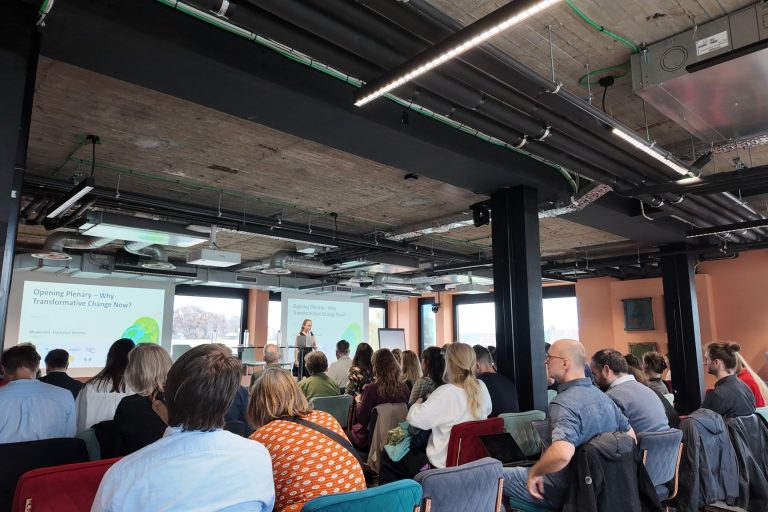
The session, titled “Seeds of Change: Participatory Science for Biodiversity and Equity”, brought together inspiring examples from around the world demonstrating how participatory science can support biodiversity conservation, social inclusion, and community-led environmental action.
On 31 March 2026, the Co-Bio project officially came to an end after several years of collaboration, learning, and co-creation across Europe.
Partners of the ACT Project gathered on 12-13 May at NINA – Norwegian Institute for Nature Research in Trondheim – for the official kick-off meeting of the project.
On May 18–19, changemakers from around the world gathered online to share bold ideas and real-world solutions for a just, sustainable future.
The LIFE LOGOS 4 WATERS project demonstrates how integrated, ecosystem-based water management can improve the climate adaptation capacity of local municipalities by addressing negative water balance challenges in two Hungarian catchments. Within the project, experts of Greenformation delivered the assessment of impacted ecosystem services and the project’s economic impacts. Building on the baseline socio-economic and…
| Cookie | Duration | Description |
|---|---|---|
| cookielawinfo-checkbox-analytics | 11 months | This cookie is set by GDPR Cookie Consent plugin. The cookie is used to store the user consent for the cookies in the category "Analytics". |
| cookielawinfo-checkbox-functional | 11 months | The cookie is set by GDPR cookie consent to record the user consent for the cookies in the category "Functional". |
| cookielawinfo-checkbox-necessary | 11 months | This cookie is set by GDPR Cookie Consent plugin. The cookies is used to store the user consent for the cookies in the category "Necessary". |
| cookielawinfo-checkbox-others | 11 months | This cookie is set by GDPR Cookie Consent plugin. The cookie is used to store the user consent for the cookies in the category "Other. |
| cookielawinfo-checkbox-performance | 11 months | This cookie is set by GDPR Cookie Consent plugin. The cookie is used to store the user consent for the cookies in the category "Performance". |
| viewed_cookie_policy | 11 months | The cookie is set by the GDPR Cookie Consent plugin and is used to store whether or not user has consented to the use of cookies. It does not store any personal data. |