
Rethinking Growth: How Can Cities and Regions Build a More Sustainable Future?
Máté Fischer, a member of the GreenFormation Kft. team, will be speaking at the international webinar at 21 October 2026.

Máté Fischer, a member of the GreenFormation Kft. team, will be speaking at the international webinar at 21 October 2026.
On 10 September 2026, preliminary results from the OneSTOP public perception survey were presented at the NEOBIOTA 2026 conference.
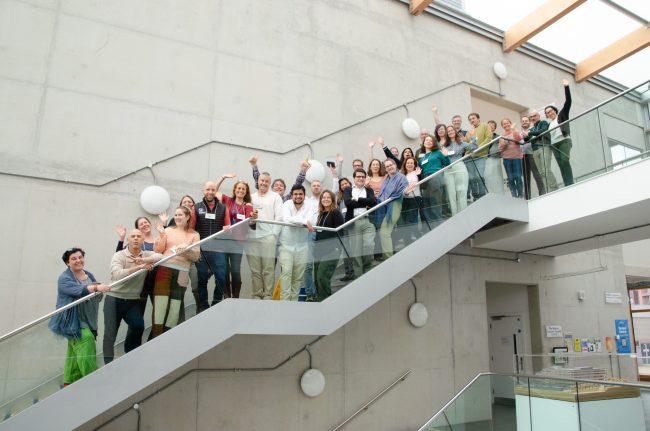
Coventry, UK — What would it take to build economies that work for people and nature alike, instead of at their expense? The paradigm driving today’s decisions (growth at any cost) continues to fuel biodiversity loss, climate change and inequality, even as credible alternatives already exist in pockets around the world. The challenge is turning those scattered alternatives into pathways that policymakers, businesses and communities can actually follow. To take on that challenge, the SPARK4B+ Horizon Europe project officially launched on 1 September 2026, with the consortium convening a week later for its kick-off meeting in Coventry, UK, on 8 September.
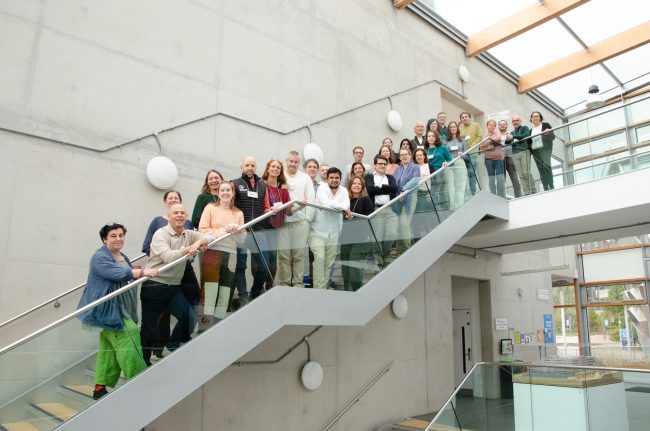
Strengthening Pathways for Alternative Socio-Economic Paradigms and Governance Frameworks and Response-able Knowledge and Action for Biodiversity-Positive and Just Futures

Today international group of health professionals in Budapest explore how climate, public health and urban policy can be thought together through the lens of the Budapest Degrowth Doughnut. Building on our collaboration with Corvinus University of Budapest, the session offers a participatory introduction to the doughnut framework and its health related implications for a just…
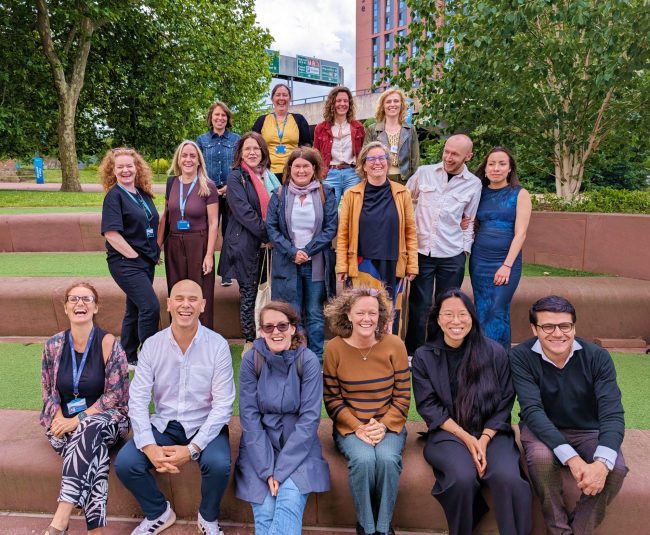
Not just to know that biodiversity is declining, but to feel it, act on it and carry that commitment into the boardroom, the classroom and the ballot box.
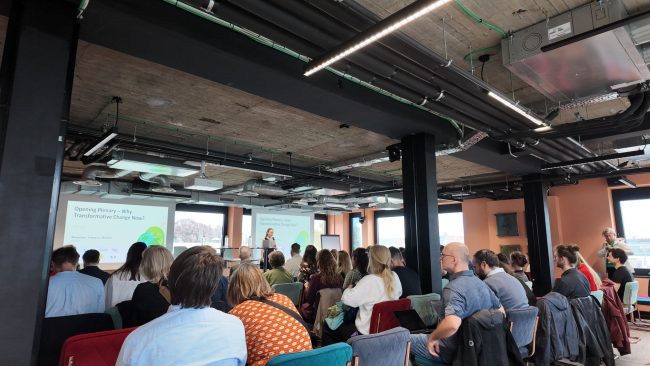
Nine transformative change projects funded under the Horizon Europe programme Transformative Change Cluster met in Brussels, Belgium, on 4–5 June 2026.
Diffusing biodiversity Response-able Action and awareness raising through citizen empowerment, inclusive engagement and innovative GOvernance of Nature and Society

The session, titled “Seeds of Change: Participatory Science for Biodiversity and Equity”, brought together inspiring examples from around the world demonstrating how participatory science can support biodiversity conservation, social inclusion, and community-led environmental action.
On 31 March 2026, the Co-Bio project officially came to an end after several years of collaboration, learning, and co-creation across Europe.
| Cookie | Duration | Description |
|---|---|---|
| cookielawinfo-checkbox-analytics | 11 months | This cookie is set by GDPR Cookie Consent plugin. The cookie is used to store the user consent for the cookies in the category "Analytics". |
| cookielawinfo-checkbox-functional | 11 months | The cookie is set by GDPR cookie consent to record the user consent for the cookies in the category "Functional". |
| cookielawinfo-checkbox-necessary | 11 months | This cookie is set by GDPR Cookie Consent plugin. The cookies is used to store the user consent for the cookies in the category "Necessary". |
| cookielawinfo-checkbox-others | 11 months | This cookie is set by GDPR Cookie Consent plugin. The cookie is used to store the user consent for the cookies in the category "Other. |
| cookielawinfo-checkbox-performance | 11 months | This cookie is set by GDPR Cookie Consent plugin. The cookie is used to store the user consent for the cookies in the category "Performance". |
| viewed_cookie_policy | 11 months | The cookie is set by the GDPR Cookie Consent plugin and is used to store whether or not user has consented to the use of cookies. It does not store any personal data. |