Mid April, a DAISY workshop was held in Budapest to discuss how to move the Budapest Degrowth Doughnut (BDD) from an inspiring concept toward a more operational pathway for urban governance. The core group of the BDD DAISY seed innovation includes representatives of the Budapest Municipality, Corvinus University of Budapest, and the Budapest Public Transport Company (BKK).
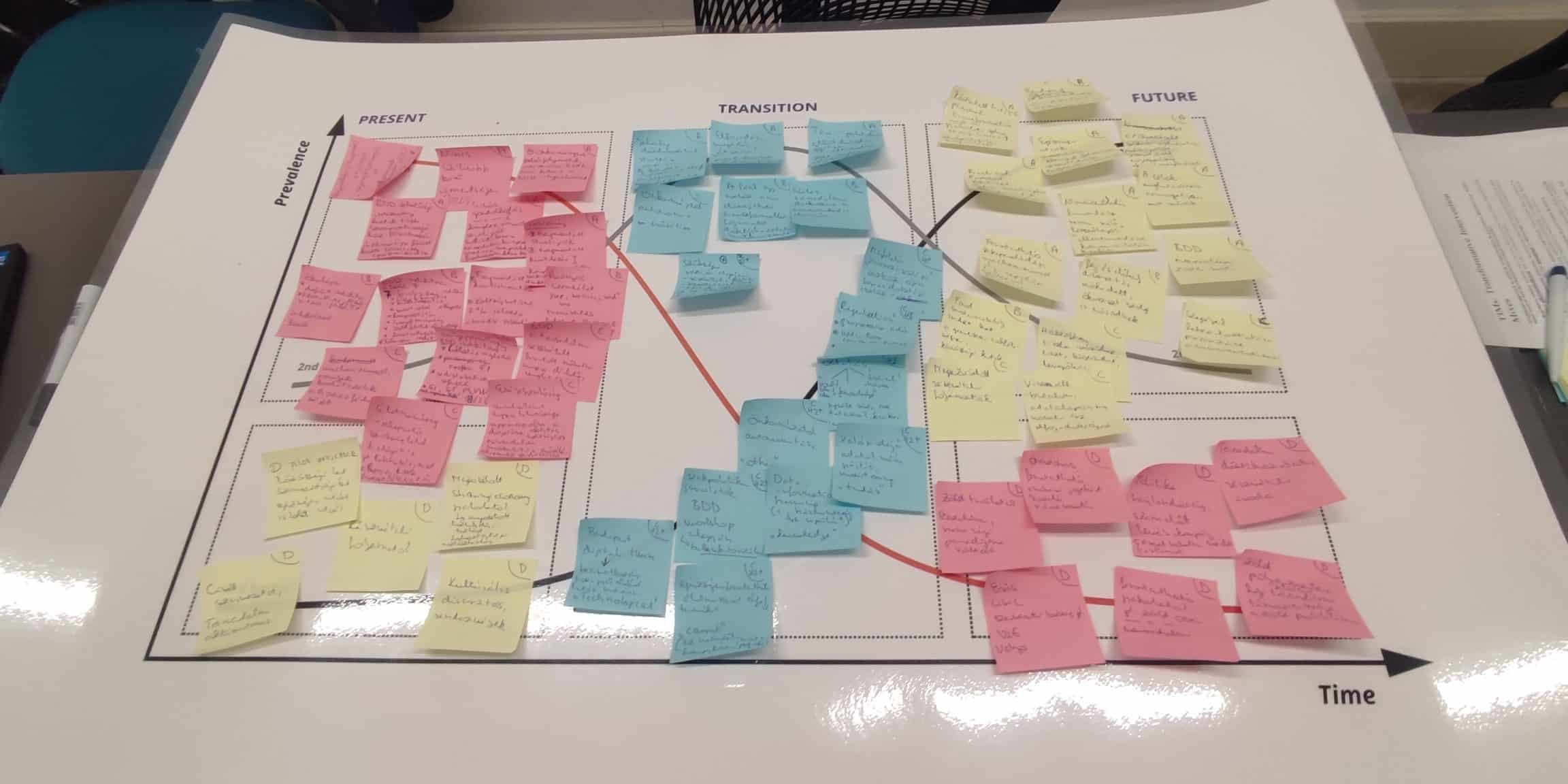
The workshop brought this core group of seed innovators to work with the Three Horizons framework: Horizon 1 for today’s challenges and assets, Horizon 3 for a mature future vision, and Horizon 2 for the transition space between them. Guided sessions helped participants articulate what a BDD‑inspired Budapest could look like in the medium term and identify political, practical, and personal barriers that currently hinder the seed from taking root, along with enabling conditions that are already emerging.
A key focus was translating broad visions into concrete Transformative Intervention Mixes (TIMs) tailored to the Budapest case. In DAISY, TIMs capture the idea that meaningful change does not happen through isolated projects or policies, but through combinations of regulatory, economic, social, technological, and knowledge‑oriented interventions that reinforce each other, including less conventional levers such as social norms, emotional appeals, and choice architecture.
For Budapest, the workshop marked an important next step in making the Doughnut actionable by linking it to specific pathways and intervention bundles that city actors such as the municipality, Corvinus University, and BKK can work with in the coming years. It produced four key outcomes: a more structured picture of current challenges and leverage points, an initial portfolio of TIM ideas how to overcome them towards a clearer Horizon 3 vision grounded in existing BDD evidence, and practical input for analytics using DAISY develooped Transformative Diagnostic Tool (TRD2).