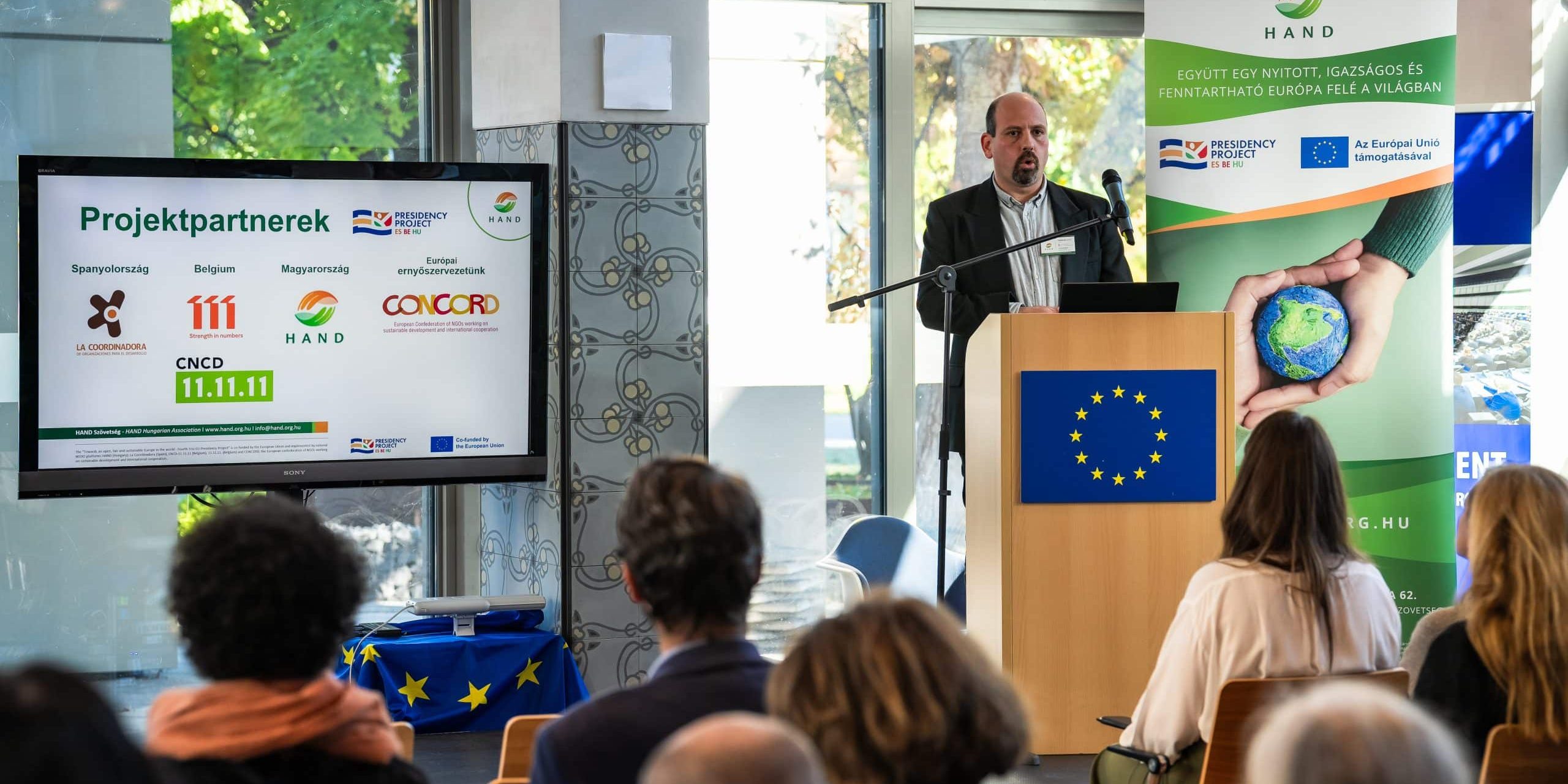
The Fourth Trio EU Presidency Project (EUPP4), supported by the EU’s DEAR programme, set out with an ambitious goal: to enhance both public and policymaker awareness of the EU’s global role, while empowering civil society organisations (CSOs) to shape the future of Europe’s international partnerships. Spanning three Presidency countries—Spain, Belgium, and Hungary—EUPP4 was coordinated by the Budapest-based HAND Association and brought together leading CSO platforms from the three Presidency countries as well as Concord Europe at EU level. GreenFormation carried out the project impact assessment, the goal of which was to explore the project’s results, impacts and lessons learned, thereby contributing to increasing the effectiveness of similar initiatives in the future.
According to our impact assessment, one of the project’s standout achievements has been the sheer scale and reach of its activities. More than 1,300 CSO representatives took part in training, networking, and capacity-building events—nearly doubling the original target. Awareness-raising campaigns, spanning hundreds of articles, videos, and public events, reached over 2.6 million people via social media and mainstream outlets. Crucially, the project directly influenced key policies, with CSO input helping to shape 11 EU and national decisions—far exceeding projections.
EUPP4’s adaptive and responsive approach deserves particular mention. When initial sub-grant calls in Spain fell short, the partners launched additional rounds, ensuring wide participation and full budget utilisation. Such flexibility helped forge new alliances and strengthened the resilience of CSOs, especially in contexts where civil society faces additional challenges.
The project, however, wasn’t without hurdles. Feedback from decision-makers was limited, highlighting a need for better engagement strategies and more structured policy dialogue. Media coverage, while significant, sometimes struggled for visibility amid broader presidential events—a reminder of the importance of targeted communication in crowded news cycles.
Overall, EUPP4 leaves behind a legacy of stronger civil society networks and improved capacity for policy influence across Europe. The lessons learned point to the need for ongoing investment in CSO empowerment, adaptive project management, and sustained opportunities for civil-public dialogue. As Europe faces complex sustainability challenges ahead, these insights will be vital for future initiatives on both national and EU scales. In case you are interested more in the assessment, contact us.