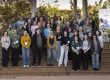


DAISY’s second consortium meeting brought 18 partners from Hungary, Germany, Greece, the UK and the Netherlands to Budapest from 24–26 March 2026, combining intensive work sessions with an urban field trip through one of the inner district of Budapest.
Based at Impact Hub Budapest, researchers from different fields took stock of DAISY’s progress so far, revisited key insights from the first work packages and deepened cross‑case learning on how “seed innovations” can drive transformative change for biodiversity and equity. Throughout the three days, discussions around the cases and the transformative intervention mixes framework not only connected retrospective insights with forward‑looking experimentation, but also highlighted concrete pathways for amplifying promising “seed” innovations and their systemic impacts across spheres. Sessions also examined how EU instruments and enabling frameworks could be leveraged and adapted to sustain, scale and connect such transformative initiatives in diverse local contexts, thereby strengthening their long‑term impact.
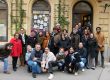
A highlight of the meeting was a half‑day urban walk linked to the Budapest Degrowth Doughnut seed innovation. Walking from the city centre into Józsefváros, participants visited Trefort utca’s pioneering “school street”, the redesigned Déri Miksa “healthy street”, and the Német József “neighbouring garden”. The walk was guided by colleagues from the Corvinus University, Municipality of Budapest, the Budapest public transport company and managers of the garden, who shared how they reshaped streets and shared spaces to prioritise children’s safety, walkability, greenery and urban biodiversity, offering rich perspectives to the international consortium. The day closed with a reflection back at Impact Hub, where partners discussed what they had learned from these concrete examples and how they could inspire other DAISY seed innovations across Europe.
Find out more about DAISY on its website.
Follow DAISY on Bluesky.
Follow DAISY on LinkedIn.
DAISY receives funding from the European Union’s Horizon Europe research and innovation programme under grant agreement No 101181857.